The Safespace Network approach uses existing networks to build consensus data layers that will benefit healthcare networks efficiently. Single organizations are typically restricted by jurisdiction or traditional data soverengty frameworks that are good at protecting their information, but poor at learning from the rest of the world.
By creating a shared data resource, the Safespace Networks can help build a consensus base layer of learning for organizations to build over a 6-12 month period and begin learning from local issues, healthcare related harm, patient experiences, and provider concerns without adding significant risk or manpower to their individual sites.
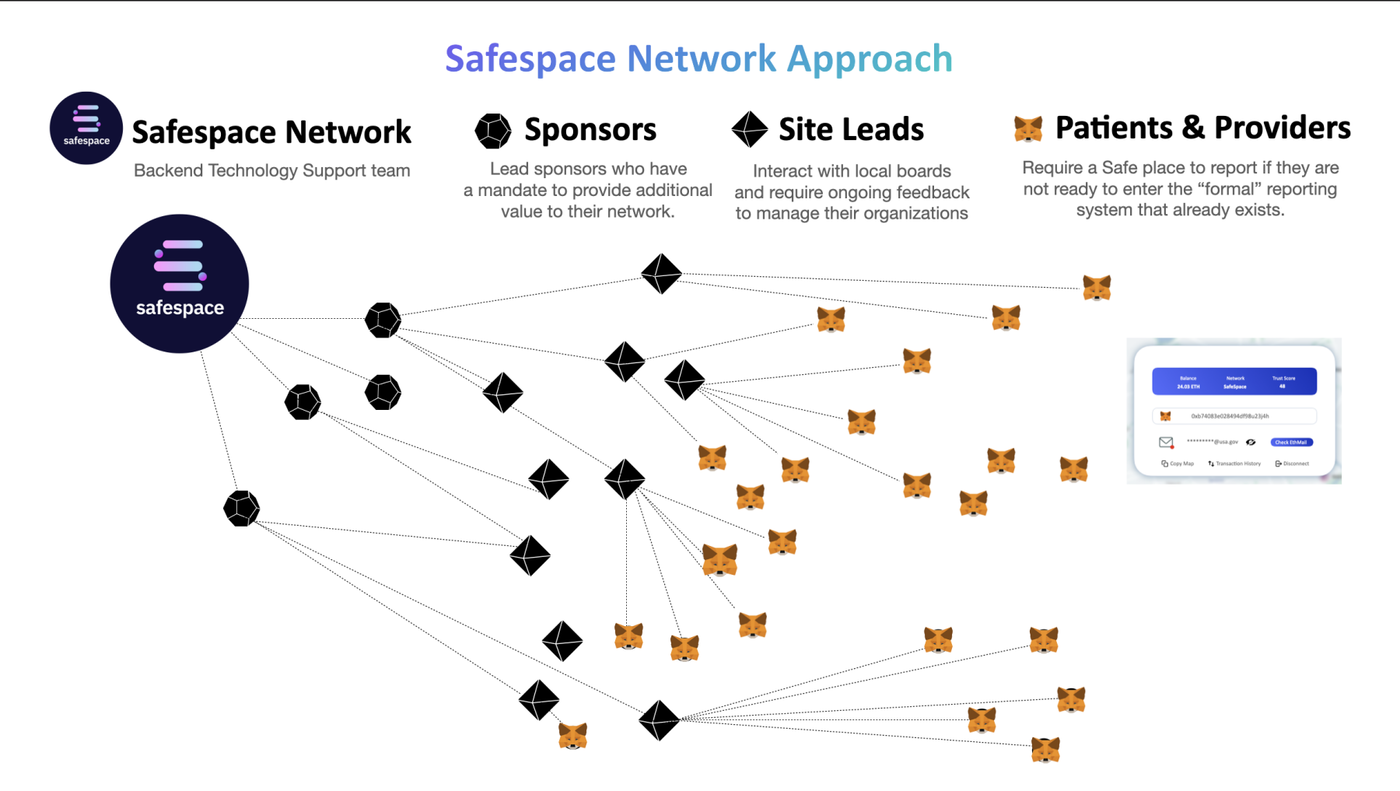
This approach is partially adapted from several research-based methodologies which challenge the current thinking that compromising privacy and increasing identity risk are baseline requirements to solving problems. By combining these concepts, we can reduce the appraoch to focus on "places and patterns" instead of "people and problems" which is mainly what the traditional system focuses on due to the legal frameworks that these healthcare systems exist in.
Both approaches can provide a benefit in different ways to the healthcare system in different ways.
One main concern with only one option, is the level of risk that is required to report through the formal system which may not always appeal to most patients and providers. Typically they will resort to sharing their feedback in private networks, or on social media, but this resulting behavior is counter productive because the wrong stakeholders hear about the problems and do not have the proper context to understand why it happened, or the decision making power to create change.
This is where the Safespace Networks can fill gaps in the system and provide value where existing systems may struggle.